


At 45, nothing suggested such a diagnosis. And yet colon cancer turned Claudie’s life upside down. Between chemotherapy, photosensitivity and deep questions about self-image, she shares a remarkably clear-eyed account with us — that of a woman who, over the months, learned to listen to her body differently, care for herself and rethink her relationship with the sun.
At 45, I never imagined that colon cancer would one day turn my life upside down. Like many people, I had the rather naive feeling that this kind of illness mostly happened to other people, especially when you lead what you consider to be a fairly balanced life. I exercised, watched what I ate without taking things to extremes, and honestly thought that was enough.
Then came the diagnosis.
From that moment on, everything changes very quickly, even though paradoxically time also seems to stand still. Life suddenly becomes paced by medical appointments, tests, treatments and chemotherapy sessions. You have to learn to move forward through something you do not control, with days when you feel capable of moving mountains, and others when simply getting out of bed already takes a huge amount of energy.
“What illness profoundly changes, beyond the treatments themselves, is the way you look at your own body. You discover a body that is more fragile, more tired, a body that changes and that you sometimes have to learn to look at again with kindness.”
There are the visible scars, of course, but also all the quieter changes the illness leaves behind, which nevertheless end up changing the way you see yourself.
I think one of the aspects that is still talked about far too little when you go through cancer is precisely this relationship with self-image. Seeing your hair become more fragile, finding it on your brush, in the shower or on your pillow, noticing that your skin reacts differently, that fatigue shows on your face... all of that may seem secondary from the outside when we are talking about a serious illness, but when you are living it, it inevitably touches something very intimate.
And yet, in the middle of this sometimes difficult period, I also discovered something I had never really thought about before: taking care of yourself is not superficial at all.
“For a long time, I was one of those women who take better care of others than of themselves. My beauty routine was often reduced to the bare minimum, and in the end I took very little time to listen to my body or give it the attention it may already have deserved long before the illness.”
These past few months have forced me to slow down and rethink many things. Thanks to beauty therapists specialising in supportive care, the supportive treatments offered at the hospital, and the workshops I was lucky enough to attend, I understood just how important these small daily gestures could become. Moisturising your skin, taking a few minutes to massage your hands or simply wearing clothes you feel good in can sometimes become real ways of reconnecting with yourself when so many reference points are shaken.
The sun has also taken on a completely different place in my life.
“With some chemotherapy treatments, the skin becomes photosensitive and reacts much more strongly to UV rays. For someone like me, who loves summer, warmth and long bright days, this was a real change. At first, I almost felt as though I would have to give up something I deeply loved, before understanding that it was not about stopping living, but simply about learning to protect myself differently and more intelligently.”
It was in this context that I discovered Ker Sun.
Before that, I associated UV-protective clothing with something very technical, almost medicalised, far removed from the idea I had of enjoying getting dressed. What I liked about Ker Sun was precisely this desire to offer protective clothing without ever sacrificing comfort, femininity or style. When you are going through illness, you already have enough things reminding you of what you are living through, so being able to wear pieces in which you still feel like yourself changes a great deal.
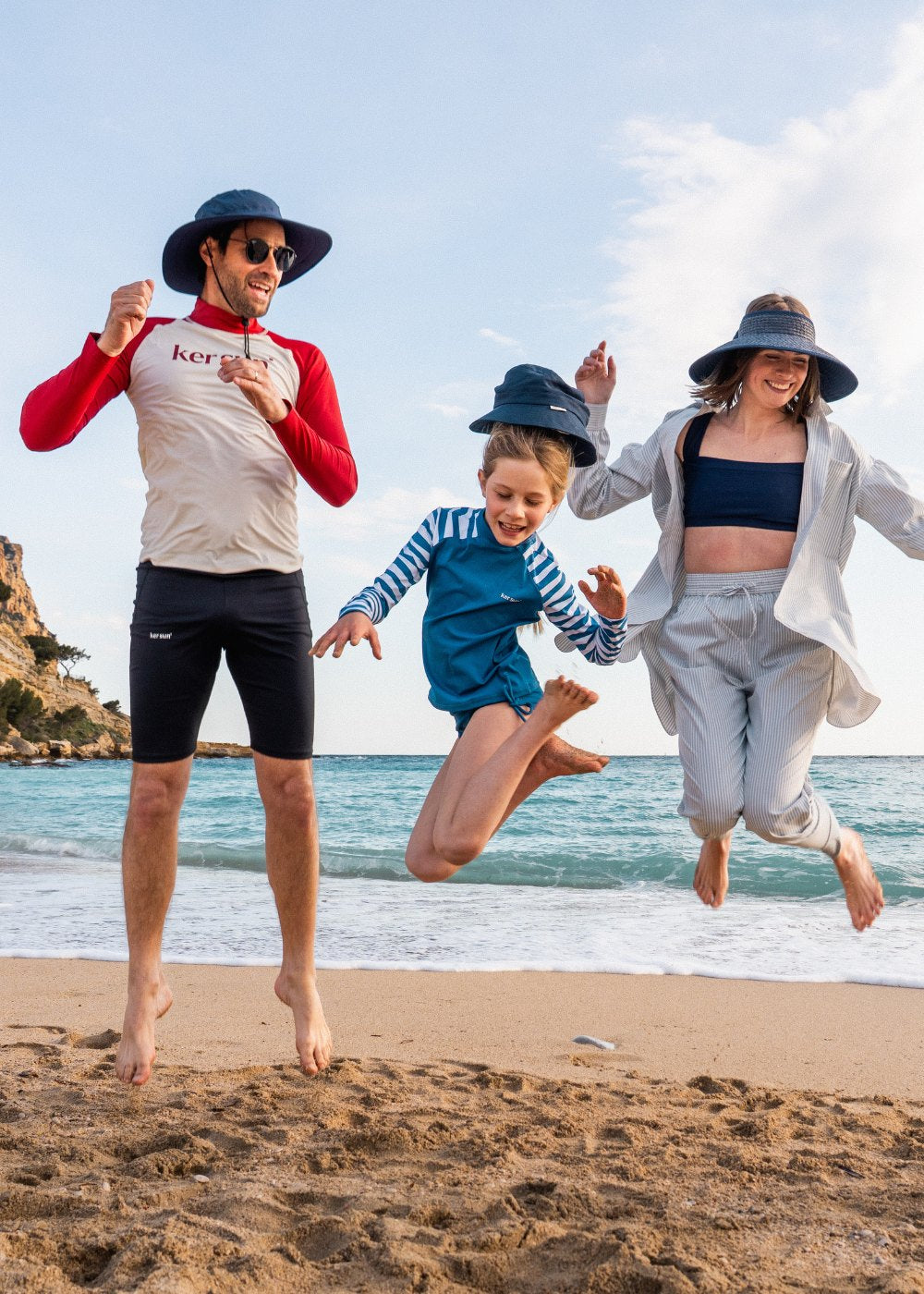
I particularly loved finding pieces in their collections that genuinely match my world and the way I like to dress every day. A Breton top, a scarf, a bucket hat or a high-waisted swimsuit then become far more than simple garments: they are also ways of regaining a little serenity, of continuing to enjoy the outdoors and the sun while feeling protected.
Looking back, I think this ordeal mainly taught me to listen to my body differently. For years, like many of us, I tended to push past fatigue, play down certain signals and always want to go faster. Today, on the contrary, I try to be more attentive to what my body needs, without waiting for it to remind me brutally of its limits.
“Because deep down, taking care of yourself should never be seen as a luxury or as something secondary. It is probably one of the most essential things this illness has taught me.”
Listen to
Mon côlon, ma bataille
Claudie created her podcast Mon côlon, ma bataille, in which she candidly describes what this cancer really means — still far too often taboo, even though it is affecting more and more young women. A rare and necessary voice, helping to break the silence and open dialogue.
Partager: